
GPT-6 Astra arrived on 3 September 2026, and within a week people were posting racers, Blender scenes and Unreal worlds built with it. We covered those public builds in what people built with GPT-6 Astra. This is the practical follow-up: what Astra is good at when you point it at a game, where it falls over, what a session costs, and how to test it fairly against Claude Opus 5.5.
One update first. On 17 November OpenAI released GPT-6.2 Astra, with API prices 20% lower than GPT-6 Astra (US$8 in, US$40 out per million tokens) and better precision when it drives CAD and simulation tools. The advice below applies to both.
What Astra is good at for games
| Strength | What the official material shows | Where it breaks |
|---|---|---|
| Long autonomous runs | Keeps notes across context windows, and earlier windows stay searchable. | Drifts on a vague brief. Keep a written checklist. |
| Computer use | OpenAI calls it its best computer-use model. GPT-6.2 Astra is more precise in CAD and simulation tools. | Breaks when an app’s UI changes. Pin versions. |
| Blender and 3D | OpenAI demoed a Blender house turned into a walkable Unreal Engine 5 scene, and its game guide used Blender for a 193-mesh ship. | One pass is rarely accurate. Check shape, scale and triangles. |
| Self-testing | OpenAI’s guide used Playwright tests, named test scenes, screenshots and a debug hook on window. | Headless tests miss real GPU frame rates. Play it on a phone. |
| Shipping | Sites in ChatGPT can create, host and share a web game from a prompt. | Hosted is not reviewed. Check data collection before sharing with students. |
Sources: OpenAI announcements and its Astra games guide, checked 24 November 2026.
OpenAI’s own game guide has a pattern worth copying on any model. The author described the experience first (“everything I can see should be reachable”), let Astra propose the architecture, gave feedback from playing, and reran the same tests before and after every change. It is honest about limits: performance numbers came from headless software rendering, and a human judged the look and the controls.
Where it breaks
- “Done” is a claim, not a fact. Agents report success confidently. Make every milestone prove itself with a test and a screenshot.
- Feel is not testable by the model. Drift, jump arcs, camera lag: only a human with a controller or a phone can judge those.
- Independent scores are mixed. Artificial Analysis had GPT-6 Astra tied with its predecessor on its Intelligence Index at launch. It is a big step on long agentic work and computer use, not on everything.
What a real build costs
An atoms.dev write-up cited a third-party estimate of roughly eight million tokens, about US$17, for an average GPT-6 Astra run on one Terminal-Bench 4.0 task. That is a benchmark task, not a game, but an evening of game iteration can be several of those. Illustrative arithmetic for one session at list prices, assuming 6 million input tokens (80% cached) and half a million output:
| Line | GPT-6.2 Astra | Claude Opus 5.5 |
|---|---|---|
| Uncached input (1.2M tokens) | US$9.60 | US$4.80 |
| Cached input (4.8M tokens) | US$1.92 | US$0.96 |
| Output (0.5M tokens) | US$20.00 | US$10.00 |
| Illustrative session | about US$31.50 | about US$15.80 |
Illustrative only, not a measured run. List API prices per million tokens: GPT-6.2 Astra US$8 in / US$0.40 cached / US$40 out; Opus 5.5 US$4 in / US$0.20 cache read / US$20 out. Excludes cache writes. Real token counts differ by model.
Output tokens dominate, so the cheapest lever is a tighter brief, not a cheaper model. On a ChatGPT or Claude subscription you pay through usage limits instead, which makes comparisons fuzzy; for a fair test, use the API or record how much allowance each run used.
The fair side-by-side: same brief, two models
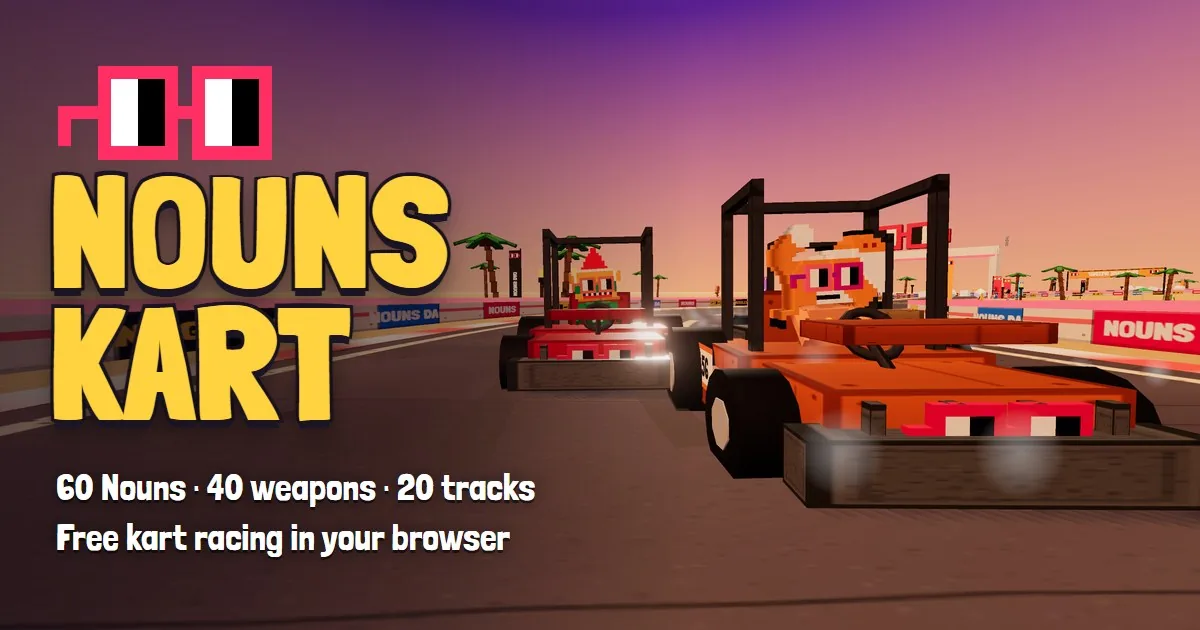
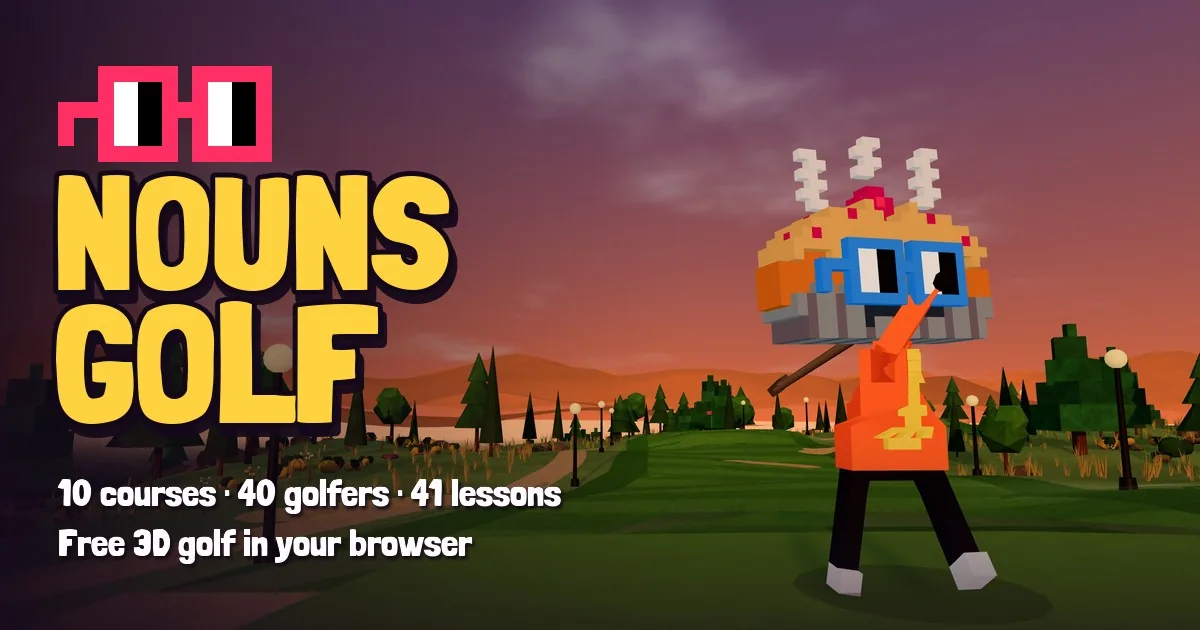
We have not run this head-to-head ourselves yet, so there is no winner here, only a method that keeps the comparison honest. Our own games on Noggles.online were built by our team with Claude Code, and two of them make good reference briefs: Nouns Kart, a voxel kart racer with 60 drivers and 20 tracks, and Nouns Golf, with 22 courses. Shrink the brief to one track or three holes so both models can finish in a session.
How to run the comparison
- 1Freeze the briefSame prompt, same empty repo, same three.js requirement.
- 2Match the settingsGPT-6.2 Astra in Codex and Opus 5.5 in Claude Code, comparable high-effort settings, the same time box (say 2 hours) and same spend cap.
- 3Same self-test rulesBoth must write Playwright tests and a requirements checklist, and prove each milestone with a test and screenshots.
- 4Playtest blindSomeone who does not know which model built which plays both on the same phone and laptop.
- 5Score on evidenceUse the scorecard below and keep the billing page figures. One run is a sample of one, so repeat with a three-hole mini-golf brief.
Start with the shared brief. Note it says “plan and propose first”, which is the single habit that saves the most money on either model.
Build a small browser kart racer in three.js. Plan and propose first: files, libraries and build order, then wait for my OK.

Version 1:
- One looping track, 3 laps, 1 player kart and 3 computer karts.
- Chase camera. Keyboard (arrows, Space to drift) and on-screen touch buttons for phones.
- Countdown, lap counter, position display and a finish screen with race time.
- Simple shapes and colours, no external art.

Rules:
- Runs in desktop and phone browsers, no install. 60 fps on a mid-range laptop, playable on a mid-range Android phone.
- After each milestone, tell me how to test it and what you checked yourself.
- Ask before any decision that changes the scope.
Then give each model the same testing rules, worded for its tool: notes for Astra, checklist files in the repo for Claude Code.
Before you call any milestone done, test it yourself.

1. Add a debug object on window reporting race state, lap, kart speed, fps, draw calls and triangles.
2. Write Playwright tests that start a race and save screenshots at the start, mid-race and finish.
3. Add a test that drives one full lap with the real keyboard controls and fails if the kart leaves the track.
4. Run the tests, look at the screenshots, and report what you saw in plain words.

Keep notes of every requirement in my brief. Before each milestone, list any you have not met yet.
Same brief, same test plan as the other model's run. Plan and propose first, then build milestone by milestone.

After each milestone:
- Run the Playwright tests and read the screenshots.
- Add a CHANGELOG entry: what changed, what you tested, what you did not.
- Keep REQUIREMENTS.md from my brief and tick an item only when a test proves it.

Do not add features I did not ask for.
Both models can work in Blender. Astra does it through computer use; Claude connects through the Blender Lab connector, which needs the Blender add-on installed and talks to Blender’s Python API. Use the same asset prompt for both so the art step is comparable.
Make one low-poly kart in Blender for a browser game.

- Under 3,000 triangles. Separate, clearly named meshes for the body and 4 wheels, each wheel centred on its own origin.
- Forward is -Y, scale in metres, about 1.6 m long. 2 or 3 flat-colour materials.
- Export to /assets/kart.glb and render front, side and three-quarter previews.

Report the triangle count and mesh names.
Use one bug report format for every bug, for both models. How each model handles bug reports tells you more than the first build.
Bug from playtesting on Android Chrome.

Did: held accelerate and drifted into the second corner.
Happened: the kart passed through the wall and the camera spun under the track.
Expected: the kart bounces off and loses speed.
Frequency: 3 out of 5 tries.

First give your best guess at the cause, write a test that reproduces it, then fix it and show the test passing. Touch nothing unrelated.
Scoring that survives an argument
| Criterion | How to measure it |
|---|---|
| Brief met | Count ticked items on the REQUIREMENTS checklist that a test proves |
| Controls feel | Three people play 3 races each, rate 1–5, with one sentence why |
| Phone performance | Same mid-range Android phone, same track, note stutters and frame drops |
| Bugs found | Bugs logged in 15 minutes of playtest, split into blocking and cosmetic |
| Changeability | Ask for one new feature (a boost pad) and count rounds until it works |
Write the scores down before you discuss them. Change one thing at a time if you rerun.
Judge two builds of the same game brief. I will paste the brief, each build's REQUIREMENTS checklist, test results and my playtest notes.

Score each from 1 to 5 on each scorecard criterion and quote the evidence for every score. List what each build needs before a 12-year-old could play it unaided. Do not pick a winner on overall impression; if the evidence is thin, say so.
A human makes the call. Use the judging prompt to organise evidence. People who played the games set the final scores.
On paper, Opus 5.5 costs half as much per token and Anthropic reports a tester running it unattended for over 18 hours; GPT-6.2 Astra topped Artificial Analysis’s 3D human-preference test, per OpenAI. The vendors report computer use on different OSWorld versions, so do not compare those numbers. Your scorecard beats either launch page.
Who this suits
For a computer science student, two builds plus a written method and scorecard make a stronger portfolio piece than one flashy demo. A 14-year-old can run the kart brief with a parent holding the spend cap; see our vibe coding guide for teenagers and AI prompting for college students. The rest of the series: the make a game with AI hub, a three.js game with Claude Opus and more AI game development prompts.
To learn the tools properly, our ChatGPT, OpenAI and Codex course covers Codex in the terminal and IDE, and our Claude and multi-agent orchestration course covers Claude Code, skills and MCP connectors. Background: GPT-6 Astra explained and Claude Sonnet 5.5 vs Opus 5.5.
Two hands-on days building real software with Claude Code: plan-first prompting, testing what the AI builds, and deploying live. The same loop you use for a game.
Next public class: 5–6 December 2026 at Worq Subang · seats available
Individuals, students and parents can join our public classes directly; HRDC is not needed to sign up.
HRD Corp claimable. AITraining2U is an HRD Corp registered training provider. Our public and in-house courses are claimable under the HRD Corp Claimable Courses (SBL-KHAS) scheme, and we prepare the grant paperwork with you. See HRDC-claimable AI training: courses, costs and how to claim.