AI Literacy Training in Malaysia: Every Employee Using AI Safely and Well
Most Malaysian knowledge workers already use AI at work — usually with tools their employer never chose and rules nobody wrote down. AI literacy training gives your whole workforce the same foundation: how AI works, where it fails, how to check its output, and how to use it without leaking company or customer data.
By Warren Leow, Founder, AITraining2U · Updated September 2026
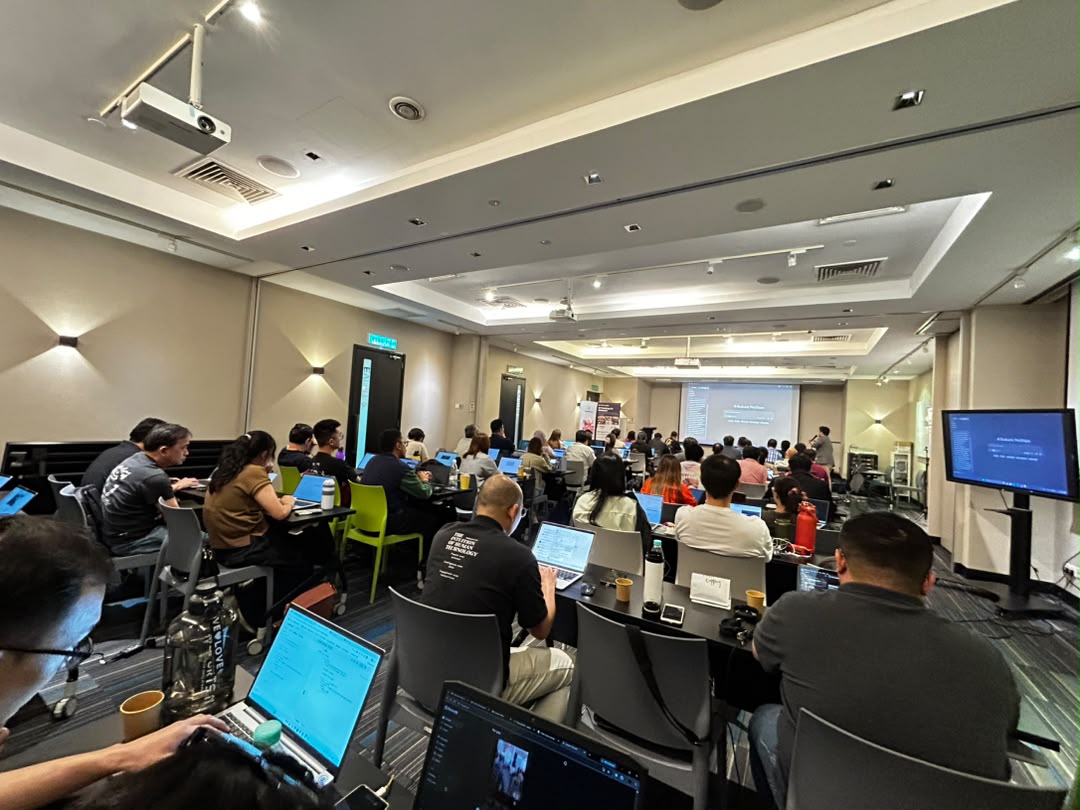
What is AI literacy?
AI literacy is the knowledge, skills and judgement a person needs to use AI competently and responsibly. The EU AI Act defines it as the skills, knowledge and understanding that let people deploy AI in an informed way while staying aware of its opportunities, risks and possible harms. The OECD and European Commission’s 2026 framework describes it in terms of understanding how AI works, judging its outputs critically, and using it ethically and creatively.
At work, that translates into five practical abilities:
- Understand what a model like ChatGPT, Copilot or Gemini is actually doing — and why it can be fluent and wrong at the same time.
- Instruct it well: give context, examples and a clear output format instead of one-line questions.
- Verify the output before it reaches a customer, a regulator or a board paper.
- Protect data: know what must never be pasted into an AI tool, and which company-approved tools are safe.
- Apply it to your own job — the emails, reports, spreadsheets and research you do every week.
AI literacy is not coding, and it is not the same as AI awareness training. Awareness aligns leadership on what AI means for the organisation. Literacy is the workforce-wide layer that makes everyday use safe and productive.
Why AI literacy matters for Malaysian organisations now
Your staff are already using AI — mostly unsupervised
Microsoft and LinkedIn’s 2024 Work Trend Index for Malaysia found that 84% of Malaysian knowledge workers use AI at work, and 83% of AI users bring their own AI tools. Globally, the same research found only 39% of AI users had received AI training from their employer. In practice that means customer lists in free chatbots, AI-drafted numbers nobody checked, and a lot of productivity left on the table because people only know how to ask one-line questions.
Employers now screen for it
The Malaysian edition of the Work Trend Index found 62% of Malaysian leaders would not hire someone without AI skills, and 65% would rather hire a less experienced candidate with AI skills than a more experienced one without. AI literacy has become a baseline workplace skill, like spreadsheets were twenty years ago.
Regulators expect organisations to train people who use AI
Malaysia’s National Guidelines on AI Governance and Ethics (AIGE), published by MOSTI in September 2024, set out responsible-AI expectations for developers, deployers and users. If your company sells into Europe or its AI systems affect people there, the EU AI Act also applies: its Article 4 AI literacy provision has applied since 2 February 2025, and after the EU’s Digital Omnibus amendments in July 2026 it requires providers and deployers to take measures to support AI literacy among staff and others using AI on their behalf. The European Commission’s guidance is clear that no certificate is needed — internal training records are enough — which makes a documented, HRDC-funded programme the practical way to show you have done it.
Government is pushing AI skills across the workforce
Malaysia launched the free AI Untuk Rakyat self-learning programme with Intel in January 2024, and more than a million Malaysians completed it within about five months. Budget 2026 allocated about RM5.9 billion across ministries for AI, including an additional 50% tax deduction for MSMEs on recognised AI and cybersecurity training. The public baseline is rising; companies need their own staff trained on their own tools and rules.
What good AI literacy training covers
A six-module AI literacy curriculum
Taught on the AI tools your company already licenses, with examples from each function’s real work.
1. How AI actually works
What large language models do, why they hallucinate, and the tasks where AI should not be used at all.
2. Prompting with context
Role, task, context, examples and format. Why examples beat instructions, and how to build a personal prompt library.
3. Checking the output
Fact-checking, asking for sources, spotting invented numbers in spreadsheets and reports before you send them.
4. Data privacy & security
What counts as personal or confidential data, consumer versus enterprise AI tools, and the habits that keep customer data out of public models.
5. Responsible use & policy
Bias, disclosure, copyright, your company AI policy, and how Malaysia’s AIGE principles apply to everyday decisions.
6. AI in your role
Hands-on practice on real tasks: email and meeting notes, long documents, spreadsheets and research — tailored to finance, HR, sales, operations or marketing.
AI literacy training options
Pick the format that fits who you’re training
Leadership & mixed cohorts · private
AI Awareness Executive Course
A full-day, demo-led workshop that aligns boards, heads and managers on what AI can do and where to invest first — the step before rolling literacy out to everyone. Tailored to Google, Microsoft, Lark, OpenAI or Claude. 100% HRDC claimable.
View the AI Awareness courseIndividuals & small teams · live online
AI Productivity Essentials
Two live online sessions covering what the model is doing, the five-part prompt, checking output, and applying AI to email, reports and spreadsheets. Recordings kept. A practical AI literacy course you can join without organising a company-wide programme.
See the online courseWhole functions · in-house or public
Platform-specific training
If your company has standardised on one AI platform, train people on that platform. Two-day HRDC-claimable courses for Microsoft Copilot 365, Google Gemini, ChatGPT, Claude and Lark.
Browse all AI coursesFree starting point
Government & free courses
Programmes such as AI Untuk Rakyat give everyone a free introduction to AI concepts. They are a good baseline, but they don’t cover your company’s tools, data rules or workflows — which is where in-house literacy training starts.
Free AI courses in MalaysiaHow to roll out AI literacy across your organisation
Sending everyone to a one-off webinar rarely changes behaviour. The rollouts that stick in Malaysian companies we work with follow roughly this sequence:
- Align leadership first. Run an AI awareness session so management agrees on which tools are approved and what the organisation wants from AI. Staff take their cue from whether their manager uses it.
- Write a one-page AI use policy. Approved tools, data that must never be pasted into AI, when AI-generated work must be disclosed or reviewed. Train on it, don’t just email it.
- Train by function, on real tasks. A finance team learns on reconciliations and management reports; HR learns on job descriptions and policy queries. Generic examples don’t transfer. See AI skills by function.
- Appoint AI champions. One or two people per department who go deeper, answer questions and share prompts that work. We describe this in the awareness layer of AI adoption.
- Measure usage and quality. Track licence usage, time saved on named tasks and errors caught. Refresh the training every six to twelve months — the tools change that fast.
- Keep training records. Attendance and completion records are your evidence of AI literacy measures for internal audit, clients and regulators. HRDC claims produce them automatically.
Is AI literacy training HRDC claimable?
Yes, when it is delivered by an HRD Corp registered training provider as a registered claimable course. AITraining2U’s in-house AI awareness and platform courses are claimable under SBL-KHAS, HRD Corp’s claimable courses scheme, where the fee is drawn from your company’s levy balance rather than paid upfront. Your HR team applies through e-TRiS before the training date; we prepare the quotation, course outline and trainer profiles. Read our step-by-step guide on how to claim HRDC for AI training, or see all HRDC-claimable AI courses.
Build AI literacy across your workforce
Tell us how many people, which functions and which AI tools you use. We’ll recommend the right mix of awareness, literacy and platform training, with an HRDC-claimable quote.
Frequently Asked Questions
About AI literacy training for Malaysian organisations.

About the author
Warren Leow
Founder of AITraining2U. Former management consultant at Bain & Company and previously CEO of Designs.ai. Warren designs AITraining2U’s corporate AI adoption programmes, from leadership awareness sessions to workforce-wide literacy rollouts. LinkedIn
Sources & references
- Microsoft & LinkedIn — 2024 Work Trend Index: the state of AI at work in Malaysia (June 2024)
- Microsoft & LinkedIn — 2024 Work Trend Index (global) (May 2024)
- European Commission — AI Literacy: Questions & Answers
- EU AI Act — Article 4: AI literacy
- OECD & European Commission — Empowering Learners for the Age of AI
- MOSTI — National Guidelines on AI Governance and Ethics (AIGE) (September 2024)
- MyDIGITAL — AI Untuk Rakyat and one million completions
- Bernama — Budget 2026 AI allocations (October 2025)
- HRD Corp — Claimable Courses (SBL-KHAS) scheme