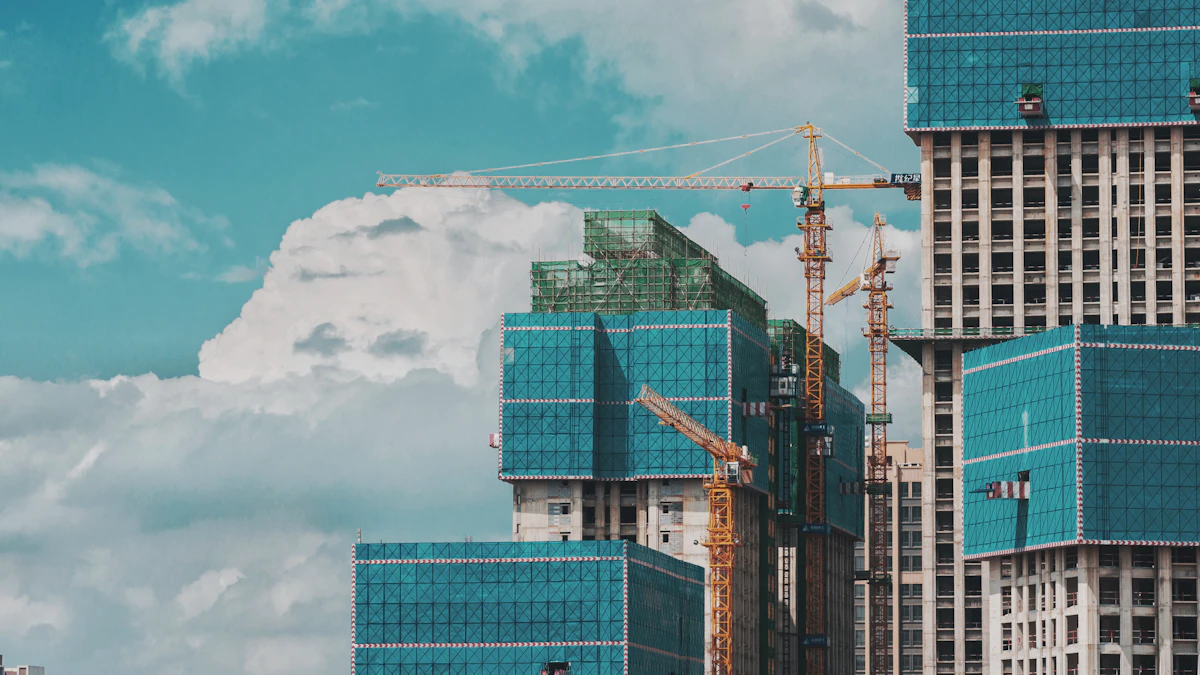
Construction is still where Malaysian workers are most likely to die at work. The Department of Statistics recorded 88 occupational deaths in construction in 2023, up from 72 the year before and the highest of any sector, alongside 5,379 injuries. Most site safety teams know the numbers. What they lack is time: between HIRARCs, toolbox talks, inspections, permit checks and reports to the client, the paperwork crowds out the walking around.
AI will not make a site safe. But it can hand back hours of that paperwork, and the leading Malaysian contractors are already pairing it with digital site controls.
The rules have tightened since 2024
- OSH (Amendment) Act 2022, in force 1 June 2024: a duty to carry out risk assessments (section 18B), principals’ duties towards contractors and subcontractors (section 18A), the right of a worker to remove himself from imminent danger, and maximum penalties for general-duty breaches up to RM500,000.
- OSH (Construction Work) (Design and Management) Regulations 2024, in force the same day, set duties for clients, designers and contractors, and DOSH has since issued a 2026 edition of its CDM guidelines.
- Safety and Health Officer: mandatory on projects with a contract price above RM20 million, according to DOSH.
- CIDB Green Card: construction personnel must register under section 33 of Act 520, with the SICW safety induction as a prerequisite.
What digital site safety already looks like in Malaysia
On the Penang LRT, Gamuda uses facial-recognition access gates, QR-code safety passport cards, digitally tracked pre-task talks and QR-certified machinery, linked to its GDOS system on Autodesk Construction Cloud. Gamuda reports 75% fewer lost-time injuries than earlier project phases and more than 20,500 people certified. Separately, Gamuda has built a generative AI assistant on Google’s Gemini and Vertex AI that reads tunnel-boring-machine sensor data and manuals. The regulator is going digital too: DOSH said in April 2025 that it had flown more than 800 drone flights for monitoring and investigation, leading to 119 notices.
Five AI workflows for a site safety team
- 1Method statement to HIRARC draftPaste the method statement and get a first-draft HIRARC in your company format, with hazards, existing controls and proposed controls, for the SHO to correct and sign.
- 2Daily toolbox talkA five-minute talk on today’s high-risk task, in plain English or Bahasa Malaysia, with three questions to check understanding.
- 3Inspection photos to findings reportUpload walk-through photos and notes; get a findings list with locations, owners and due dates. Microsoft’s own Copilot scenario for safety inspections follows this pattern.
- 4Subcontractor document checkCompare a subcontractor’s safety plan and risk assessments against your requirements before mobilisation, and list what is missing.
- 5Near-miss trendsFeed three months of near-miss reports into AI to surface repeat locations, trades and times of day for the next safety meeting.
AI drafts; the competent person decides. In a 2024 study, GPT-4o answered 84.6% of 385 professional safety-exam questions correctly, but was weakest on emergency response and fire prevention, and small prompt changes moved its score by up to 13.5 points. That is a capable assistant, not a signatory. Under CDM and the risk-assessment duty, the named competent person still owns the assessment. Keep a record that a human reviewed every AI draft.
Mind the privacy side of site tech
Facial-recognition gates and camera analytics are effective, but biometric data has been sensitive personal data under the PDPA since 1 April 2025, with a duty to appoint a data protection officer and notify breaches from 1 June 2025 and maximum fines of RM1 million. Tell workers what is collected and why, and keep the data no longer than you need it. More in our PDPA and AI guide.
Where to start
Start with toolbox talks and inspection reports. They happen every day, the time saving is visible to the whole site within a week, and a weak draft is easy to catch. Move to HIRARC drafting once the team has a review habit. If your company runs on Microsoft 365, the quickest route is Copilot; for long documents such as tender safety requirements, Claude handles them well.
Two days for site safety teams on AI-assisted HIRARC drafts, toolbox talks, inspection reports and subcontractor reviews, using construction examples and your own templates.
Public dates coming soon — in-house classes run on your dates.
Also tailored for oil and gas, manufacturing and plantation and logistics. Construction firms looking at wider AI use can read our construction case study.
HRD Corp claimable. AITraining2U is an HRD Corp registered training provider. Our public and in-house courses are claimable under the HRD Corp Claimable Courses (SBL-KHAS) scheme, and we prepare the grant paperwork with you. See HRDC-claimable AI training: courses, costs and how to claim.