This is the second layer of our AI change-management model. Once awareness has landed, you have a short window before the enthusiasm fades. The roll-out layer is where you spend it — converting “I get it” into a workflow people actually use. Across 1,800+ people trained, the difference between roll-outs that stick and pilots that stall comes down to a handful of choices.
From awareness to a working workflow
Start with one real workflow, not a platform
The instinct is to buy a big platform and “roll out AI.” The teams that succeed do the opposite: they pick one painful, frequent, well-understood process — monthly reporting, customer replies, data reconciliation — and make AI do that one thing well. A single visible win creates more momentum than a broad, shallow deployment ever will.
Name a process owner
The fastest way to kill a roll-out is to make it everyone's job, which makes it no one's. Every workflow needs a single accountable owner from the business side who lives the process. This role matters enough that we wrote a whole guide to it — see AI process owners.
Make it hands-on — and claimable
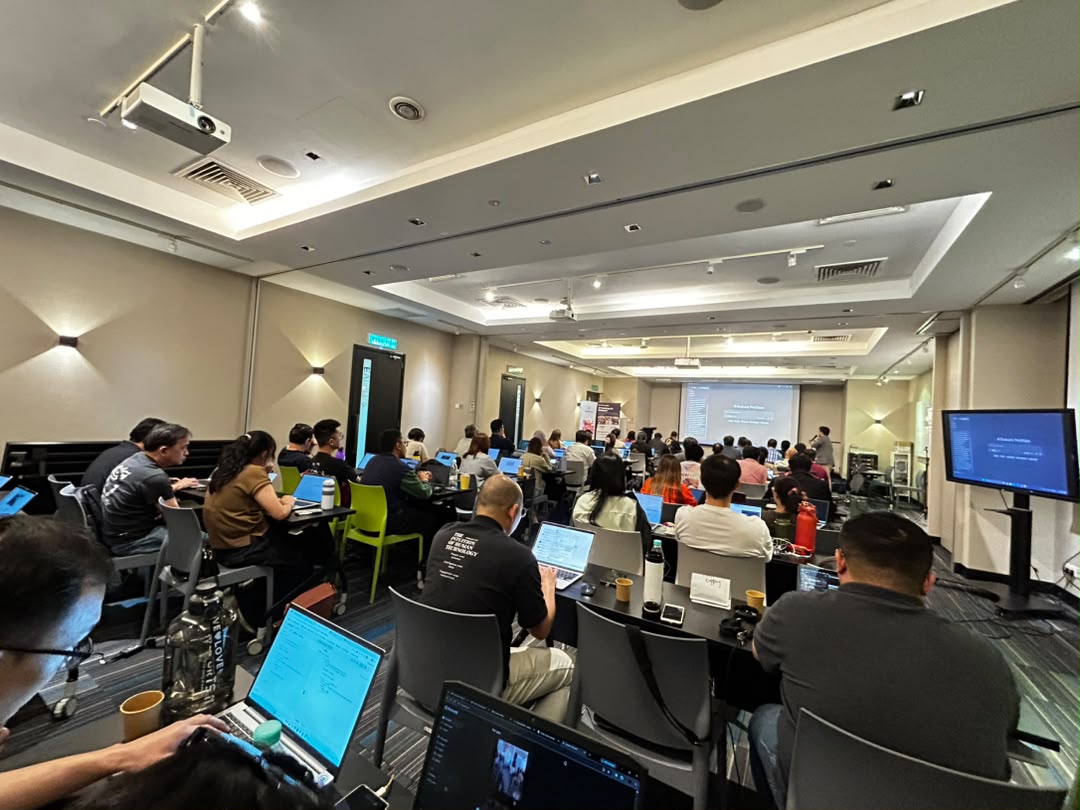
People adopt what they build. A passive demo produces nodding; a hands-on session where the team builds the automation themselves produces capability. This is why our roll-out training is workshop-based — for example, building a real n8n automation during the class — and why it is HRDC SBL-KHAS claimable, so the cost is rarely the blocker.
Share accountability between business and IT
Roll-outs fail in the gap between “the business wants it” and “IT has to support it.” The workflows that scale have clear shared accountability — the business owns the outcome, IT owns the guardrails, and both know their part.
Measure, and mark milestones
Tie every workflow to a concrete before-and-after number and celebrate the milestones as you hit them. This does two things: it proves the value, and it builds the evidence base you will need to win budget and mandate at the next layer. We treat this as its own practice — AI automation milestones.
Why pilots stall — and what comes next
If a roll-out stalls, it is almost always one of these missing: no single workflow, no owner, no hands-on capability, or no measurement. Fix those and the pilot moves. Fix them repeatedly across the organisation and you are ready for the third layer — strategy, where scattered wins become the way the business operates. For a deeper look at the failure modes, see why most AI pilots fail.
Why pilots stall: the four missing pieces
When a roll-out stalls, it is almost always one of four things missing, and each has a fix. No single workflow — the effort was spread too thin; pick one. No owner — it became everyone’s job and therefore no one’s; name a process owner. No hands-on capability — the team watched a demo but never built anything; make training a build. No measurement — nobody can say what it saved, so it lost its budget. Diagnose which one is biting before adding more tools. For the full pattern, see why most AI pilots fail.