
When finance work is document-heavy and the numbers have to be defensible — a 200-page filing, a valuation model, a reconciliation — Claude is the model most teams reach for. Anthropic has leaned into this: Claude for Financial Services ships agent templates and pre-built financial Skills, Claude in Excel works natively in the spreadsheet, and MCP connectors wire Claude into market-data and accounting systems so agents act on live, governed data. Anthropic reports Sonnet 4.5 topped a finance-agent benchmark at 55.3% — a reminder that a human stays in the loop. This guide closes our tool-by-tool finance series (see n8n, Copilot 365, Lark and Gemini).
Why Claude fits document-heavy finance
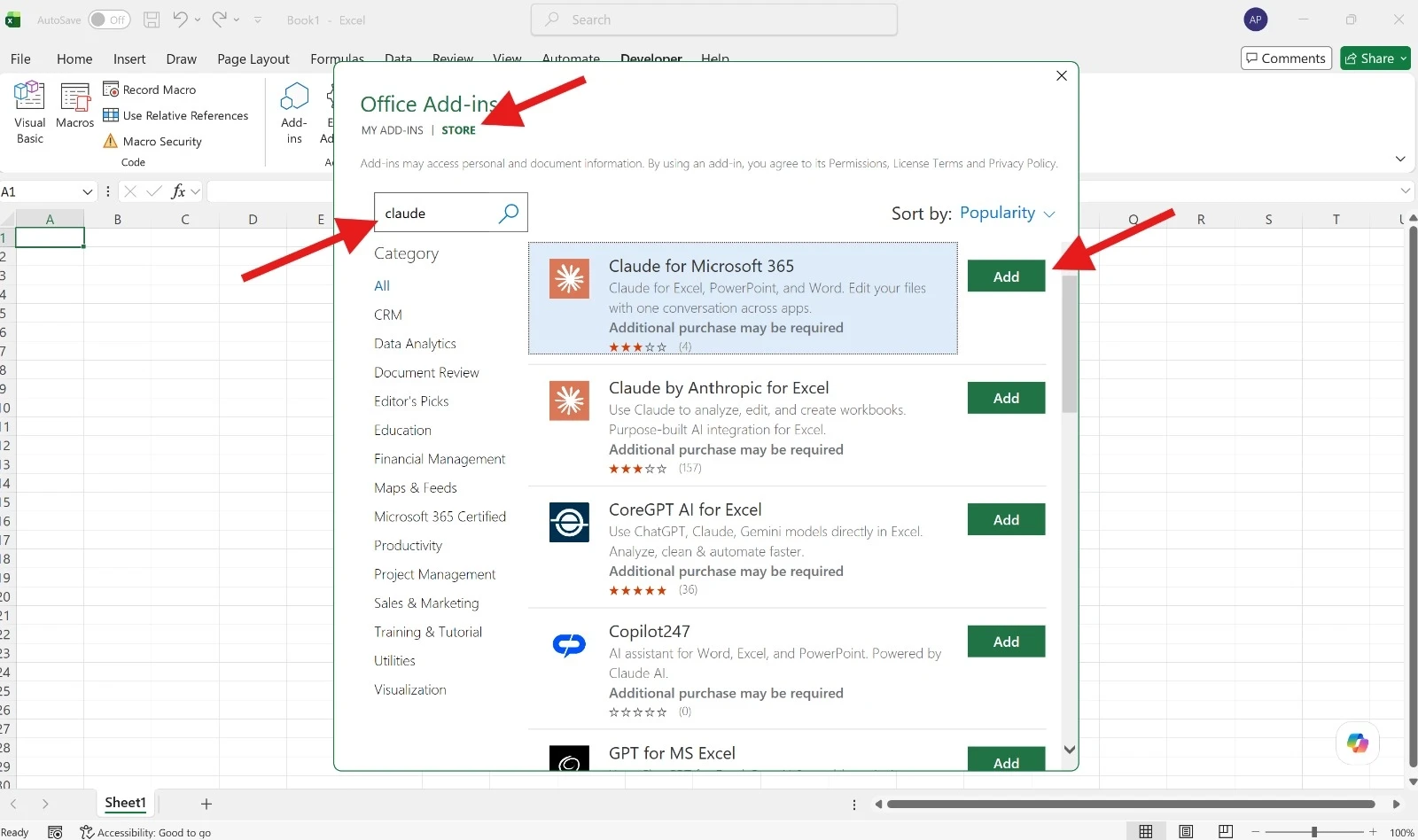
Claude’s strengths line up with the hardest parts of finance: best-in-class long-document reasoning (parse hundreds of pages of filings, contracts and data-room PDFs in one pass), careful step-by-step reasoning with transparency about how it got there, and native spreadsheet work via Claude in Excel. MCP — the open standard for connecting Claude to external tools and data — lets agents pull from S&P Capital IQ, Moody’s, FactSet and your own ERP, so they reason over real data rather than copy-paste. And the product deliberately keeps the analyst in the loop, reviewing and approving before anything ships — the right posture for audit and accounting.
Six agentic finance workflows with Claude
| Finance use case | How the AI agent works | The payoff |
|---|---|---|
| 1. Multi-agent statement analysis | A new filing or consolidated statement arrives; a statement-auditor agent reviews it for internal consistency and audit-readiness, an MCP connector to S&P/FactSet pulls comparables, Claude in Excel rebuilds and validates the model, and it drafts a workpaper with cited cell references. | Faster, traceable statement review with an audit trail of the cells and sources used. See AI for audit. |
| 2. Contract / loan-agreement review | Legal uploads a loan agreement or indenture; Claude extracts covenants, rates, maturities and defined terms from the full document, a Moody’s MCP connector adds credit data on 600M+ entities, it cross-checks covenant compliance against the financials and generates a risk memo as an Artifact. | Covenant and credit risk surfaced in minutes, grounded in Moody’s data, packaged for review. |
| 3. Reconciliation & month-end close (Claude Code + MCP) | At period-end, a GL-reconciler agent reconciles accounts and runs NAV calculations, Claude Code connects via MCP to the ERP to query balances, a month-end-closer runs the checklist and drafts journal entries, and exceptions route to a human. | Automated reconciliation and journal drafting with exception-only human review. See reconciliation. |
| 4. DCF / valuation modelling in Excel | An analyst needs a valuation; the DCF Skill builds free-cash-flow projections, WACC and sensitivity tables, a comparable-company Skill runs multiples, a model-builder agent pulls filings, and a valuation-reviewer checks the output inside Claude in Excel. | A defensible, transparent valuation model built and cross-checked in a fraction of the usual time. |
| 5. Earnings & annual-report summarisation | A covered company reports; an earnings-reviewer agent reads the transcript (via an Aiera connector) and filings, extracts key metrics and management commentary, updates the live model and flags material changes versus prior guidance, then drafts a client-ready note. | Same-day earnings takeaways with model updates and change-tracking, not manual transcript scraping. |
| 6. Due-diligence Q&A over a data room | A deal team opens a secure VDR; a due-diligence Skill structures documents into spreadsheets, long context lets Claude answer natural-language questions across the whole corpus with citations, and connectors add portfolio and private-market context. | Data-room Q&A and diligence summarisation at scale, with source-cited answers for the deal memo. |
What is real today — and the honest limits
Shipping now: Claude in Excel (an Excel add-in that reads, analyses and creates workbooks, handling nested formulas and cross-tab dependencies while explaining which cells it used), full Microsoft 365 add-ins plus Claude for Outlook, Claude for Financial Services with 10 agent templates and 6 pre-built financial Skills (DCF, comparable-company, due-diligence packs, earnings, teasers, coverage), MCP connectors to S&P, Moody’s, FactSet, LSEG, MSCI, PitchBook and more, and Claude Code + the Agent SDK for building custom agents against internal systems. The honest limits: Claude in Excel is beta and does not yet do pivot tables, conditional formatting, macros or VBA; the finance-agent benchmark is ~55%, so outputs need human verification and Anthropic keeps a human-in-the-loop step by design; real-time data depends on you holding the underlying licences (Moody’s, S&P, FactSet) — connectors surface data, they do not grant entitlements; and much of the suite is gated to paid/Enterprise plans and still in beta.
The Malaysian angle: rigour, MCP and HRD Corp
For a Malaysian audit, corporate-finance or FP&A team, Claude’s appeal is rigour on the document-heavy, judgement-heavy work — with a transparent trail an auditor can follow. The skills to orchestrate Claude Code, MCP and Skills are HRDC-claimable via SBL-KHAS (see HRDC AI training); our Mastering Claude & Multi-Agent Orchestration course covers exactly this. Pair with AI for accountants, financial reporting, and the primer what is agentic AI.
Master Claude & multi-agent orchestration for finance
- Build a multi-agent statement-analysis and reconciliation flow
- Claude in Excel for valuation and variance work
- MCP connectors to your ERP and market-data providers
All classes are HRDC-claimable for eligible employers — delivered on your own finance processes and data.
Where to start
Start with the document work Claude is best at — feed it a full filing or contract and let it extract, summarise and cross-check with citations. Add Claude in Excel for a reconciliation or valuation. Then, when you want agents acting on live data, wire MCP to your ERP and a market-data provider — keeping a human approving every number that matters.
If you want to see this pattern running rather than read about it, SuperAgentK is a Malaysian-built agentic workspace — a team of AI agents in your own sandboxed environment that arrive already knowing Malaysian statutory rules (EPF, SOCSO, payroll deadlines) and plug into the systems you already run. There is a live demo at demo.superagentk.com.
Disclosure: SuperAgentK is co-founded by a member of the AITraining2U team.