Grow Faster Than
Your Competitors with AI
Warren breaks down how AI-first companies are pulling ahead of rivals still running manual processes — the intelligence plays you run in Claude or Copilot, the n8n automations that keep them running without you, and the vibe coding that lets you ship a new experience in days.

Led by practitioners,
not theorists

Chan Wei Khjan
Audit Partner, YYC · MIA Board
Chartered Accountant (ACCA · C.A.(M) · FCA Singapore) and MIA board member. Featured in Business Insider for pioneering AI inside the accounting profession.

Marcus Chia
AI Product Manager & Harness Engineering Expert
Builds and ships AI workflows in the wild — Claude projects, MCP servers, multi-agent pipelines and data dashboards. Turns messy business problems into working AI solutions.

Warren Leow
Founder, AITraining2U PLT
Drives AITraining2U's mission to equip 100,000 Malaysians with practical AI skills — hands-on with AI agents, automation and applied analytics for enterprise teams.

Azhari A. Razak
Multi-Agent Systems Builder
Founder of Urbanite Enterprise, an AI consultancy for Malaysian SMEs. Nineteen years of mission-critical network operations at Telekom Malaysia, now delivering Claude, n8n and multi-agent workflows in production.

Goh Man Fye
Founder, Wistify · AI for Healthcare
Pharmacist-turned-data-scientist with a Master in Data Science & Analytics. Has built production AI for triage, medical scribing and retinopathy screening, and speaks nationally on AI governance.
Warren leads today's session — every play paired with a prompt or an n8n workflow you can run the moment you're back at your desk.
Trusted by leading Malaysian organisations
























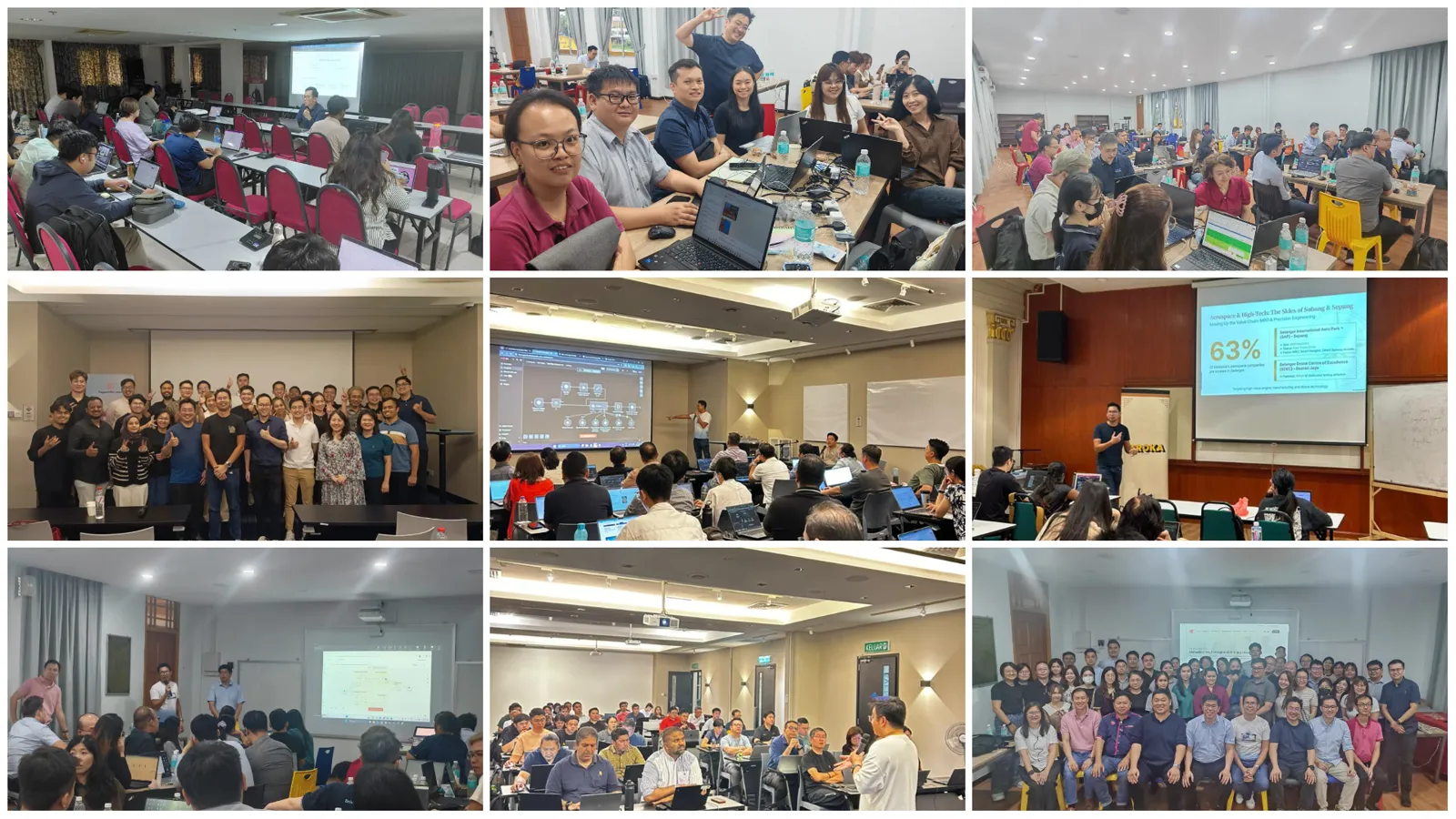
Banking, telco, retail, healthcare, energy & government-linked companies — teams across Malaysia upskill with AITraining2U.
Your competitors aren't
smarter. They're faster.
AI-first companies haven't found a better strategy. They've collapsed the time between knowing and doing — the competitor review that took a quarter now runs every Monday, and nobody has to remember to do it.
Meanwhile the manual shop still books a two-week “market study”, still benchmarks off a 2023 report, and still hears about a rival's price cut from a customer.
The Exponential Gap
Technology compounds. Organisations don't — and the widening gap between the two is where your competitors either pull ahead or fall behind.
Technology — Exponential
New models and tools compound on each other, doubling capability again and again.
Organisational Understanding — Linear
Awareness grows steadily as people are trained and exposed to what's possible.
Organisational Change — Linear, Slower
Process, structure and incentives move even more slowly than understanding does.
All three start from the same base. Left unmanaged, the gap between what technology can do and what the organisation can absorb is exactly where AI transformations stall — and it is the gap the rest of this session is about closing.
Three sections.
Six things you'll take home.
Every example ships with copy-ready prompts — tap Copy, paste in, edit the bracketed bits, run.
Know your rivals better than their own staff do
Competitor research prompt set
Using the live web, build a dossier on these competitors: [Rival A, Rival B, Rival C]. We are [what we do] in [country / region]. For EACH, visit their site, pricing page, careers page and any recent reviews, then capture: - Positioning & target ICP - Core offer + top 3 features - Pricing tiers (price + what's in) - Proof: logos, case studies, funding - Hiring signals — what the open roles say about where they're heading - Sharpest message & weakest spot One comparison table, a row per rival. Cite a source URL for every fact and flag anything you couldn't verify.
Here's us: [1-paragraph description + our pricing + our 3 best proof points]. Using the dossier above, build a one-page battlecard per rival: 1. Where they genuinely beat us (be honest — no spin). 2. Where we beat them, with the proof point that lands. 3. The 3 objections a buyer raises when they've seen that rival, and the exact reply — under 30 words each. 4. The trap question that exposes their weakness without trashing them. Then rank the rivals by how much of our pipeline they actually threaten.
Now tear down the pricing. 1. Lay every rival's tiers side by side with ours: price, what's bundled, what's an add-on, contract length. 2. Work out their effective price per [seat / outlet / transaction] — not the headline number. 3. Where are we over- or under-priced for what we deliver? Quantify it. 4. Propose 2 pricing or packaging moves we could make this quarter, with the risk of each. Show your assumptions and cite the pricing pages you read.
Tip: same play in either stack — Claude + web search, or Copilot + Microsoft 365.
What comes back: the rivals, laid bare
Our running example — “Kopi Kita”, a fictional 14-outlet KL specialty-coffee chain — runs the dossier prompt on its three closest rivals:
| Rival | Avg cup | Sharpest edge | Weak spot | Hiring tell |
|---|---|---|---|---|
| Rival A | RM9–12 | App + scale | Bean quality | 12 tech roles |
| Rival B | RM7–10 | Outlet density | Thin margins | Franchise ops |
| Rival C | RM15–20 | Craft + loyalty | Slow service | 2 baristas |
| Kopi Kita | RM11–14 | — (to define) | — | — |
Rival A is hiring 12 engineers and a “subscription growth” lead. A weekday coffee subscription is coming — the exact niche Kopi Kita was about to enter. Move now or pick another lane.
- • vs A: “Cheaper per cup — but ask what bean.”
- • vs B: “They're everywhere; we're worth the walk.”
- • vs C: “Same grade, half the wait, RM5 less.”
Illustrative figures for teaching — not real company data. A live run cites every source URL.
Find out where you're actually behind
Careful: benchmarks are directional. Always make the model show the source and the definition — “gross margin” means three different things in three different reports.
Industry benchmarking prompt set
We're a [business type] in [country], [size: revenue / headcount / outlets]. Using the live web, build the benchmark set for our industry. Give me the 8-10 metrics that actually decide who wins — financial, operational and commercial. For EACH metric: - The standard definition (state the formula — no ambiguity) - Industry median and top quartile - The source and its year - How much it varies by company size Flag any metric where the public data is thin or the definitions conflict. Don't invent a number to fill a cell.
Here are our numbers: [paste or attach the P&L / ops sheet — last 12 months]. Score us against the benchmark: 1. Recompute each metric from our data using the benchmark's own formula, and show your working. 2. Place us in a quartile per metric — bottom / below / above / top. 3. For each gap, convert it to money: "closing this to median is worth ~RM[x] a year." 4. Rank the gaps by value at stake ÷ effort to close. End with the 3 gaps worth our attention and the one to deliberately ignore.
Take the top 3 gaps and turn each into a 90-day plan: the owner, the weekly leading indicator, the first move in week one, and what "closed" looks like. Then set the cadence. Using Cowork, Schedule a monthly run that: 1. Re-pulls the benchmark (flag if any source has been updated). 2. Re-scores us on the latest actuals. 3. Shows movement vs last month. Put a recurring "benchmark review" on my Google Calendar for the first Monday of each month, with the scorecard in the invite notes.
Tip: attach the actual sheet — Claude + Cowork + Google Calendar, or Copilot + Excel + Outlook.
The scorecard: where the money is leaking
Kopi Kita scores its last 12 months against the specialty-café benchmark set:
| Metric | Us | Median | Top qtile | Verdict |
|---|---|---|---|---|
| Gross margin | 61% | 66% | 72% | Below |
| Revenue / outlet | RM1.09m | RM0.95m | RM1.30m | Above |
| Labour % of sales | 31% | 27% | 23% | Bottom |
| Repeat-customer rate | 38% | 34% | 46% | Above |
| Waste % of COGS | 7.4% | 4.5% | 2.8% | Bottom |
Waste and labour are the whole story: pulling both to median is worth ~RM720k a year — more than the six new outlets were forecast to add.
Revenue per outlet is already above median. Chasing top quartile there means longer queues in the same footprint — high effort, low return. Park it.
Illustrative figures for teaching — a live run cites the source and definition behind every benchmark column.
Hear it the morning it happens, not the quarter after
Competitor news monitoring prompt set
We're [what we do] in [country]. Set up a competitor monitoring brief. 1. List who to watch, in four buckets: direct rivals, adjacent players who could enter, key suppliers, and the regulators that affect our costs. Say why each one is on the list. 2. For each, give the specific sources worth checking — site, pricing page, careers page, newsroom, LinkedIn, trade press, regulator bulletins. 3. Define the signal categories we care about: pricing, product, people, capital, regulation. 4. Define what makes a signal high / medium / low impact for us. Output it as a reusable brief I can paste into every weekly run.
Using the watchlist brief above, search the live web for everything from the last 7 days and give me the digest. Rules: - Only items you can link to. No rumours, no "reportedly" without a source. - Group by signal category, sort by impact on us. - Each item: one line of what happened, one line of so what for us, one line of do what — and "no action" is a valid answer, say it plainly. - Cap it at the top 5. List the rest as one-line mentions. - Open with a 2-sentence "if you read nothing else". Then flag anything that contradicts what we assumed in our benchmark or plan.
Automate it. Using Cowork, Schedule this to run every Monday at 8am: 1. Re-run the weekly digest above. 2. Diff against last week's run — mark each item new / developing / closed, and drop anything already reported. 3. Keep a running log so we can see a rival's pattern over months, not just this week's headline. Then email me the digest via Gmail with the "if you read nothing else" section at the top. Draft it — don't send. If nothing scored high impact, say so in one line instead of padding the email.
Tip: same play in either stack — Claude + Cowork + Gmail, or Copilot + Microsoft 365 + Outlook. In Section 2 we rebuild it in n8n.
Monday's digest: 14 items, 3 that matter
8:00am, before Kopi Kita's founder opens the laptop — sorted by impact, each item carrying its own next move:
Rival A is testing a price cut in Klang Valley only. It's a test, not a rollout — don't match it yet.
Rival A cut bundle pricing 12% — 9 Klang Valley outlets only. So what: our RM12 weekday plan is now 8% above theirs in 3 overlapping catchments. Do: hold price, watch their traffic 2 weeks, prep a loyalty response.
Rival C posted 2 senior roasting roles. So what: they're building in-house roasting — their cost per cup falls in ~6 months. Do: re-open the bean supply contract now, before they lock the same supplier.
Draft single-use packaging rules out for consultation. Do: nothing this week. Revisit when the final text lands.
The other 11 items were real news but not decisions — a new outlet opening, a CSR post, a rebrand. They stay in the log, out of the email. A digest you skim is a digest you cancel.
Week 1 this is interesting. By week 12 you can see a rival's pattern — where they test, how fast they roll out, what they abandon. That's the part competitors running this manually never accumulate.
Illustrative — generated from a fictional watchlist. A live run links every item to its source.
Insight is worthless
if it needs you to run it.
Everything in Section 1 works — right up until the week you're busy. n8n is where a good prompt becomes a process that runs at 8am whether you remember it or not.
One process, automated end to end
n8n is a visual workflow builder: a trigger starts it, nodes do the work, and an AI node handles the judgement a rule can't. Self-hosted or cloud — your data, your infrastructure.
Build the n8n workflow — with AI doing the drafting
Here's a process we run manually: [describe it end to end — who starts it, what arrives, every step, where it ends up, how often, how long it takes]. Design it as an n8n workflow: 1. The trigger (schedule / webhook / app event) and why that one. 2. Each node in order — name, node type, and what it does. 3. Where a decision is needed: is it a rule (IF / Switch) or genuine judgement (AI node)? Justify each. 4. The data shape passed between nodes. 5. Failure handling: what happens on a bad input, an API timeout, or a low-confidence AI answer. 6. What stays manual — and why. Then estimate hours saved per month.
Write the system prompt for the AI node in that workflow. Its job: [classify / extract / summarise / decide]. It must: - State the role and the one job. No chit-chat, no preamble. - Return strict JSON only, with this schema: [fields + types]. - Include a "confidence" 0-1 and a "needs_human" boolean. - Say exactly what to do when the input is unclear or a field is missing — never guess, flag it instead. - Handle the 3 edge cases we hit most: [list them]. Then give me 5 test inputs — 3 normal, 2 nasty — and the exact JSON each should produce, so I can verify before I switch the workflow on.
Now produce the importable n8n workflow JSON for the blueprint above — nodes, parameters and connections — so I can paste it straight into a new workflow. Use placeholders for every credential and ID; never inline a secret. Then give me: 1. A go-live checklist: what to test with real data before switching the trigger on. 2. The 3 most likely ways this breaks in production, and the node to add to catch each. 3. A human-in-the-loop step for anything below the confidence threshold, routed to [Slack / email / a review sheet]. 4. What to log on every run so we can audit a decision 6 months later.
Reality check: treat the generated JSON as a first draft. Import it, wire the credentials yourself, and test on real data before the trigger goes live.
Supplier invoices: 6 hours a week → 20 minutes
Kopi Kita receives ~120 supplier invoices a week across 14 outlets. One person keyed them in. Here's the workflow that replaced that:
to invoices@
image OCR
+ confidence
No → review queue
| Step | Manual | With n8n | Change |
|---|---|---|---|
| Open & sort mail | 50 min | 0 | automated |
| Key in line items | 4h 10m | 0 | automated |
| Chase unclear invoices | 45 min | 20 min | −56% |
| Errors caught at month-end | ~9 | ~2 | −78% |
About 6% of invoices land in the review queue — smudged scans, odd units, a new supplier format. That's the workflow working, not failing.
Illustrative figures for teaching. Your first workflow will take an afternoon to build and a week to trust — budget for both.
Section 1 and Section 2, joined up
The same competitor monitoring you ran by hand in Example 03 — rebuilt in n8n so it runs every Monday at 8am on your own infrastructure, keeps its own history, and only interrupts you when it should.
Competitor-watch workflow prompt set
Design an n8n workflow that runs our competitor watch every Monday 08:00. Watchlist: [rivals + the URLs from Example 03 — pricing pages, newsrooms, careers pages, RSS feeds]. Specify: 1. Schedule trigger + how to fan out over the list without hammering any one site. 2. Fetch & extract nodes per source type (HTML page, RSS, news search). 3. A diff step: compare to the stored version and pass on only what changed — so we don't re-analyse unchanged pages. 4. Where each result is stored, and the dedupe key so nothing is reported twice. 5. Retries, timeouts, and what happens when a site blocks us.
Write the system prompt for the AI node that scores each change we detect. Context to bake in: we are [what we do], our rivals are [list], and what matters to us is [pricing / product / people / capital / regulation]. For each item it must return strict JSON: - category, headline, source_url - impact: high / medium / low, and the one-line reason - so_what (effect on us) - do_what (the move — or "no action") - is_material: true only if a person should read it this week Rules: never infer a fact that isn't in the source text; if the change is cosmetic, mark it low and move on; be blunt, no marketing language.
Finish the workflow with the routing.
1. Switch node on impact:
- high → alert me immediately on
[Slack / Telegram / email]
- medium & low → hold for the
Monday digest
2. Build the digest: "if you read
nothing else" at the top, then items
grouped by category, capped at 5,
with the rest as one-line mentions.
3. Email it via [Gmail / SMTP]. If
nothing was material, send one line
saying so — never pad it.
4. Append every scored item to [Google
Sheets / Postgres] with the date, so
we build a history.
5. On any node error, post the failure
to [ops channel] — a silent broken
watcher is worse than none.
Then give me the importable JSON.
Scrape politely: respect robots.txt and terms of use, rate-limit your requests, and prefer official feeds and public pages over anything behind a login.
The watcher, running
Same digest as Example 03 — but nobody prompted it. Kopi Kita's workflow ran at 08:00, checked 23 sources, and stopped after the two that mattered:
Mon 08:00
news search
6 changed
+ so what / do what
5 → digest + log
Bundle price changed RM13.90 → RM12.20 on the Klang Valley pricing page. So what: undercuts our weekday plan in 3 overlapping catchments. Do what: hold price, watch 2 weeks. Source: rivala.com/pricing — diff attached.
5 medium/low items: 2 careers posts, a new outlet, a CSR release, a supplier notice. Logged, not sent as alerts.
23 sources checked, only 6 sent to the AI node. The diff keeps the run cheap and fast — and stops the model re-summarising a page that hasn't changed since March.
Your competitor will eventually notice that price change too — from a customer, in six weeks. You knew at 08:04 on the Monday. That gap, repeated weekly, is the whole thesis of this session.
Illustrative — fictional watchlist and figures. Check each source's terms of use before you point a scraper at it.
This is what they
actually look like
Six workflows from our n8n labs. Notice how little is on each canvas: a trigger, a handful of nodes, and one AI node doing the judgement.
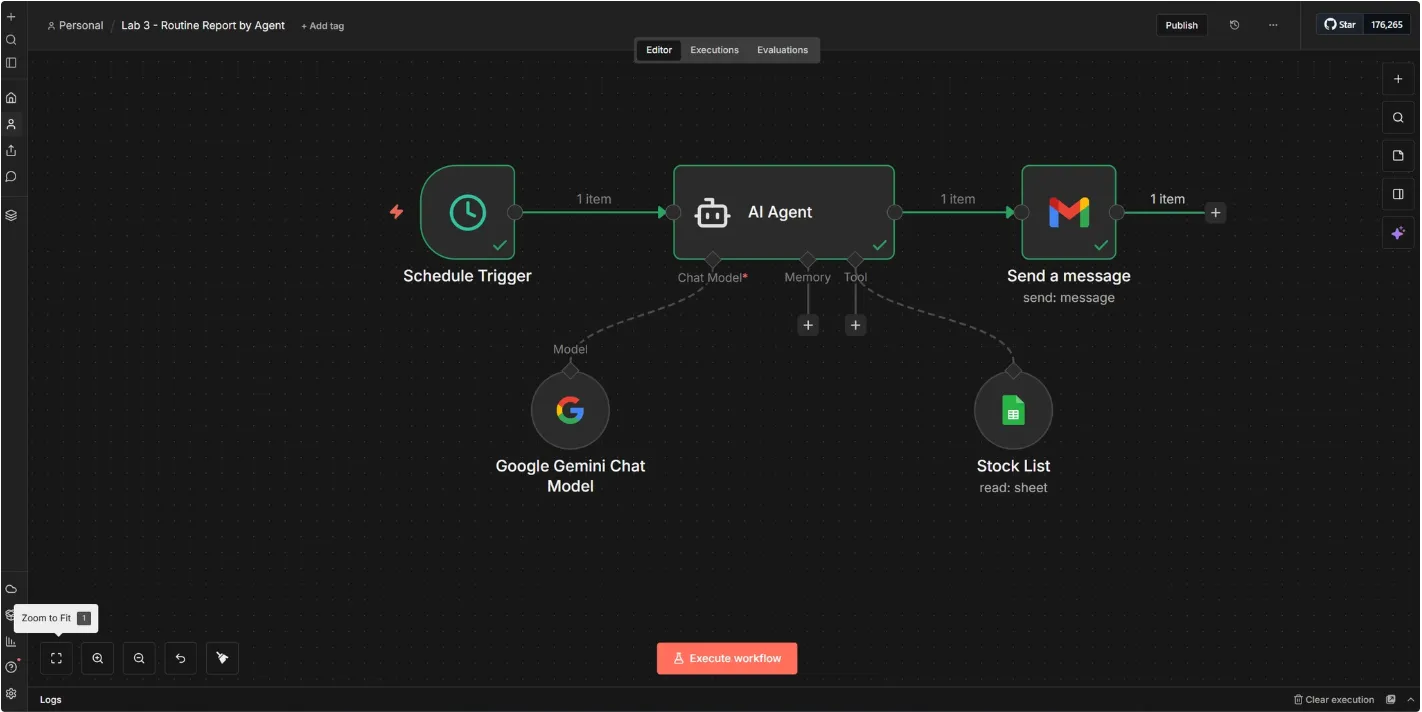
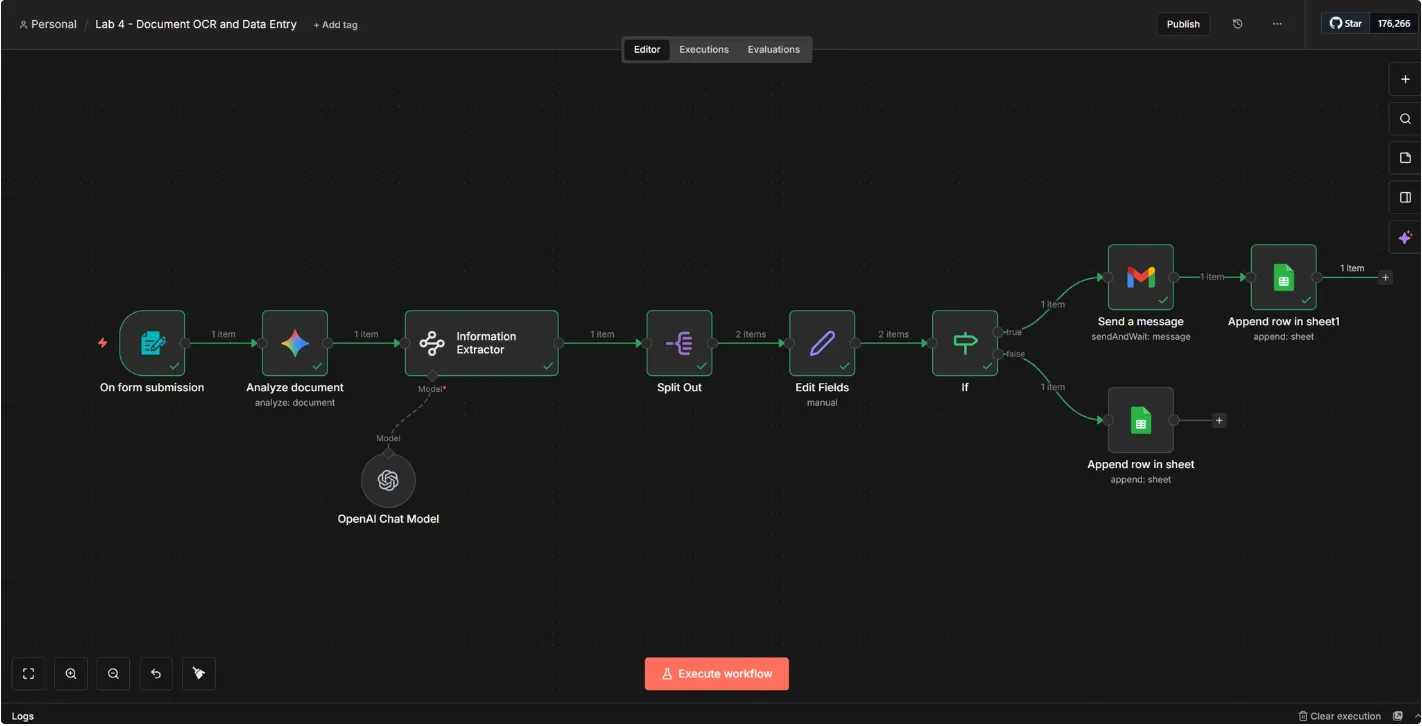
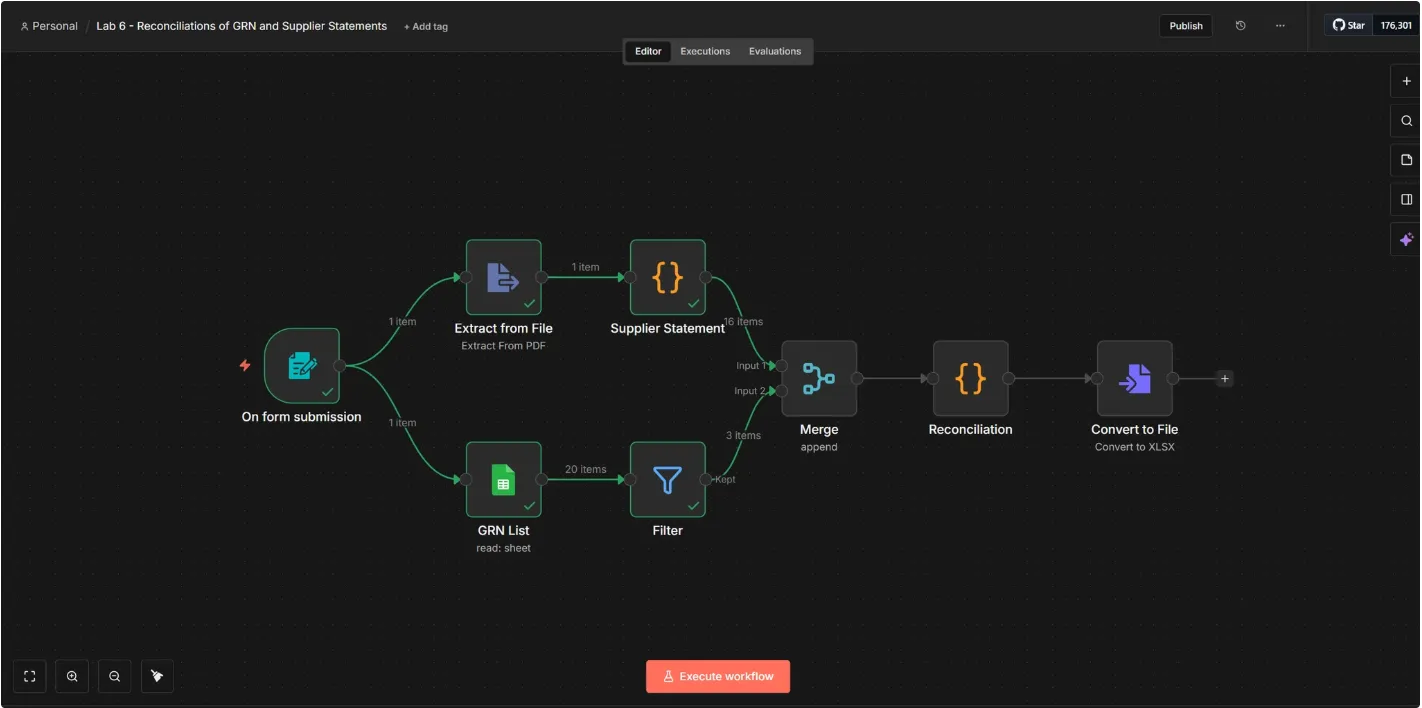
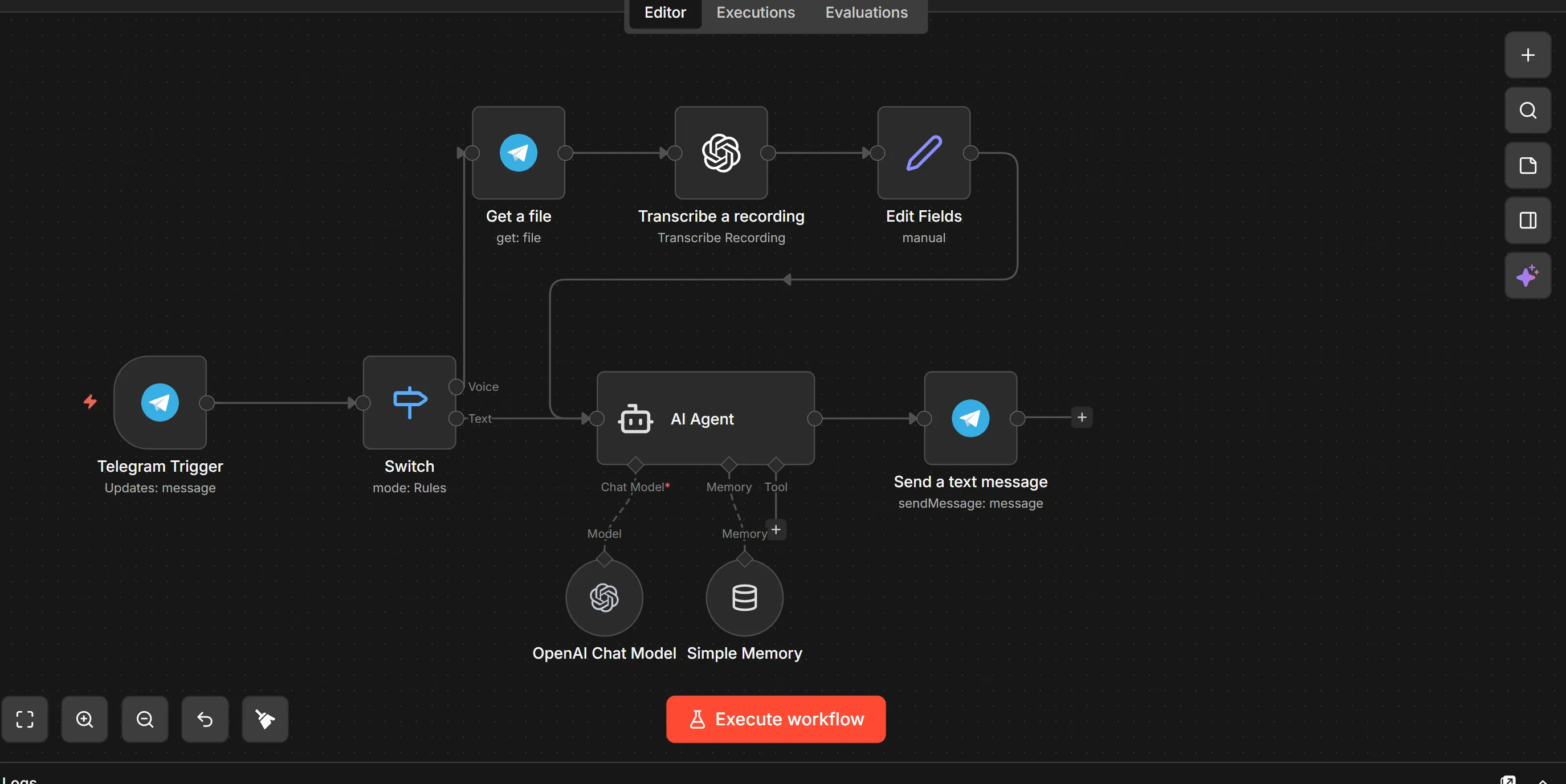
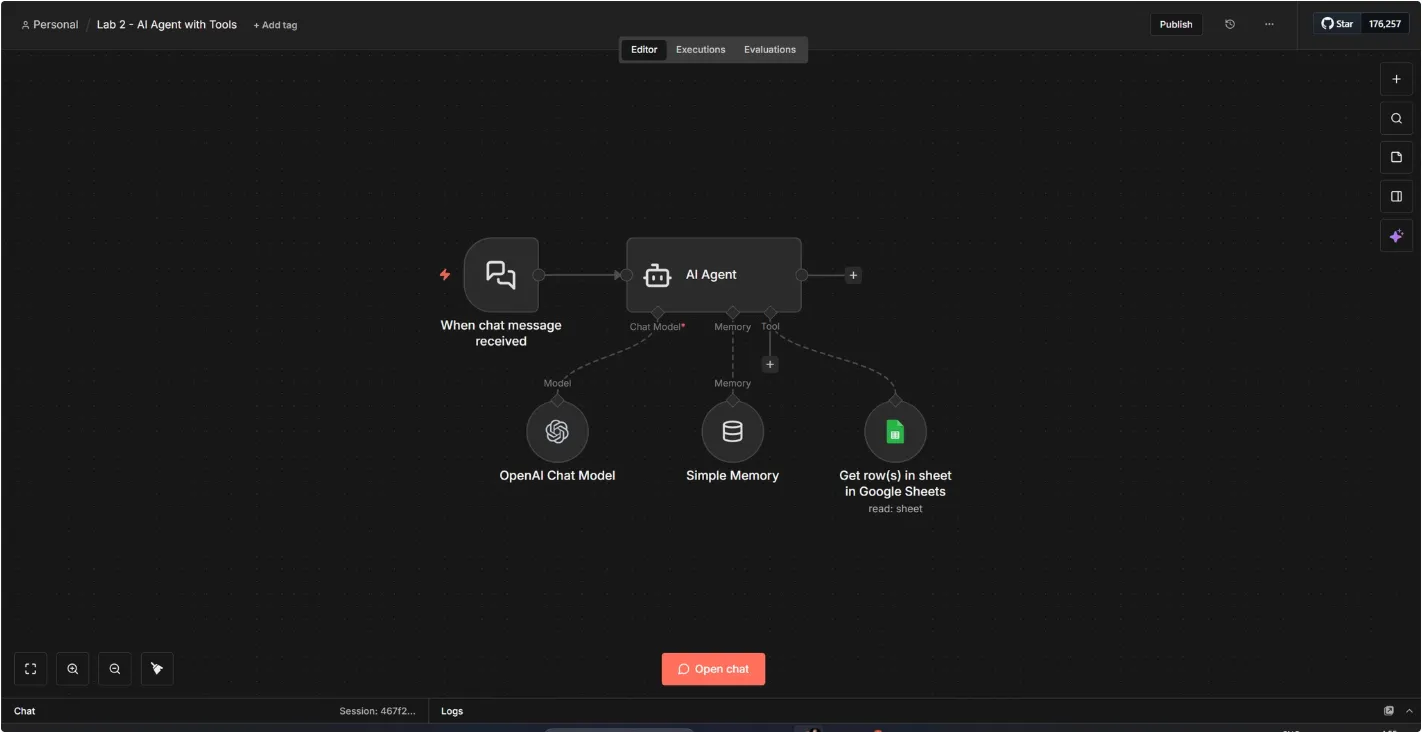
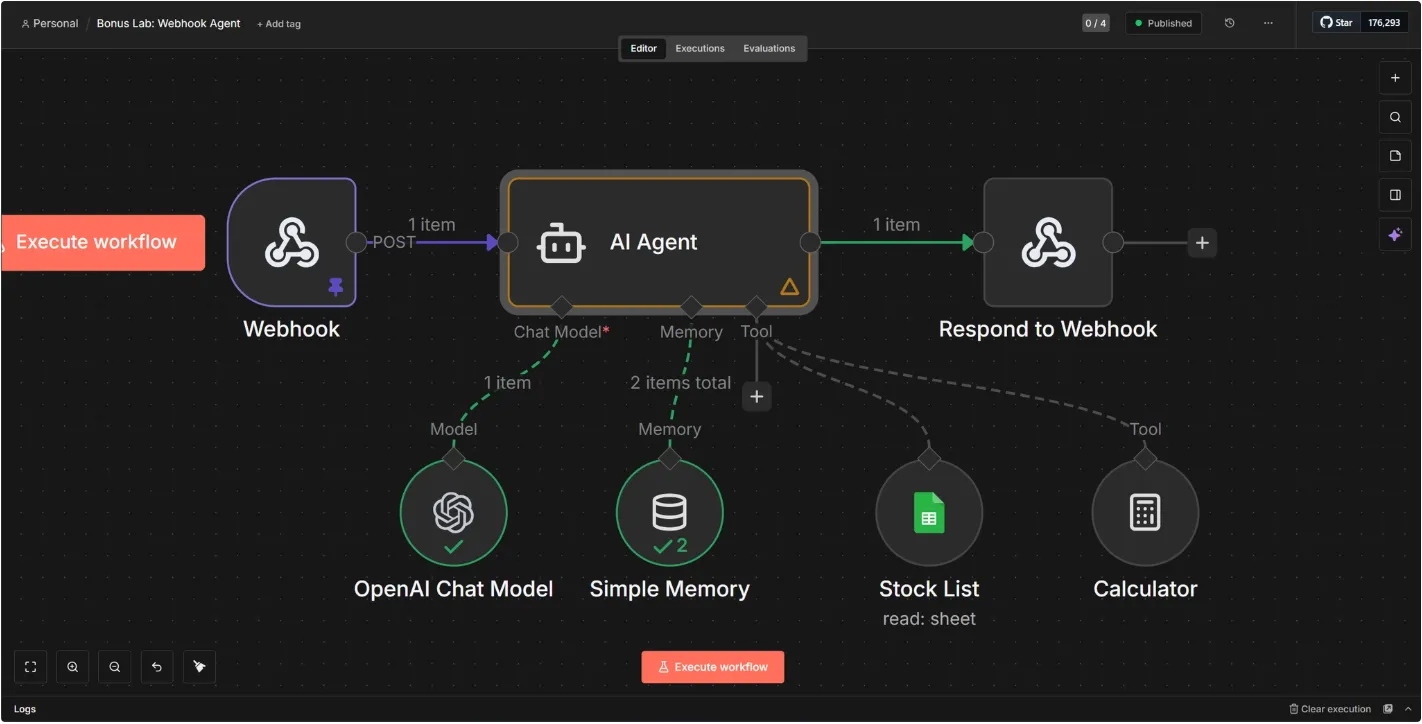
None of these took a developer. If you can describe the process, you can draw it — the prompts on the last slide write the first draft for you.
The last moat is
how fast you ship.
Knowing the market and automating the back office still leaves one race: who puts a new customer experience live first. Vibe coding is how a non-technical founder gets there in a weekend instead of a roadmap quarter.
Ship the idea while they're still scoping it
See what people with no engineering background have shipped: aitraining2u.com/vibe-coding/showcase
The software life-cycle, with AI in every phase
Software has always run through the same six phases. What's changed is that a non-technical person can now stand in each one — with AI doing the part that used to need a specialist.
AI does: turns a rambling description into a scoped brief, success metric and cut-list.
AI does: writes the user stories, edge cases and the questions you forgot to ask.
AI does: screens, flows and a clickable prototype in minutes — three versions to react to.
AI does: writes the code, wires the data, deploys to a link you can share.
AI does: writes tests, hunts its own bugs, connects to Sheets, Stripe or your n8n workflows.
AI does: explains the code back to you, patches it, and ships v2 the same afternoon.
The phases didn't change — the cost of going round the loop did. Anything touching customer data, payments or PII still gets a technical review before it goes live.
From “someone should build this” to a live link
I'm not technical. Here's a problem in our business: [describe it — who suffers, what they do today, the workaround, how often, what it costs us]. Act as my product partner: 1. Ask me the 5 questions you need answered before anything is built. Wait for my answers. 2. Then write a one-page spec: the user, the job to be done, the 3 screens, and the single success metric. 3. Cut it to a v1 we can build today — list what we're deliberately leaving out and why. 4. Flag anything that touches customer data, payments or PII so we get a technical review before go-live.
Build the v1 from that spec. I want something I can open on my phone and hand to a colleague today. Rules: - Work in small steps and show me the result after each one — I'll steer. - Keep it simple: one page where you can, plain language in the UI, no jargon on screen. - Use [our brand colours / logo]. - Sample data first so I can click through it before we connect anything real. - After each step, tell me in plain English what you just did and what I should test. Then deploy it to a link I can share.
We've tested v1 with [n] real users. Here's what broke and what they asked for: [paste the feedback]. 1. Fix those, smallest change first. 2. Now be the sceptic: what would break this with 50 users, a bad input, or someone hostile? Fix what matters, list what doesn't. 3. Add the boring essentials: input validation, an error message a human understands, and a backup of the data. 4. Connect it to [Google Sheets / our n8n workflow / email]. 5. Write a one-page handover for whoever maintains this: what it does, where it lives, how to change the common things.
Real examples built by non-engineers: aitraining2u.com/vibe-coding/showcase
Not slides. Working apps.
Every screen below is a real, clickable build — described in plain English and produced by prompting, not by an engineering team. Tap any one during the session and it opens live.
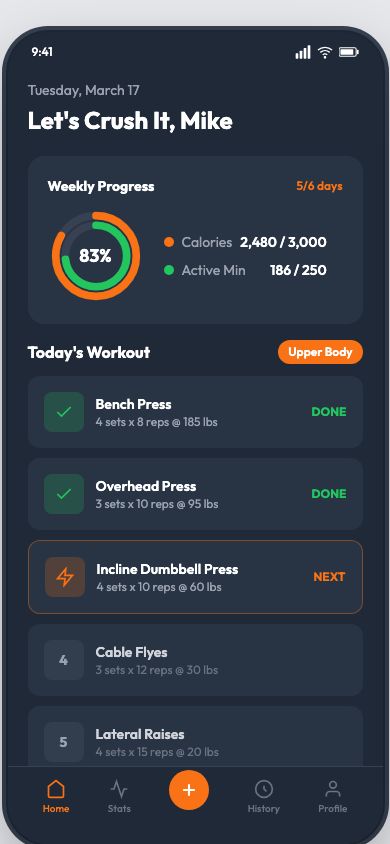
Six of 81 builds in the showcase — and every card carries the exact prompt that produced it. aitraining2u.com/vibe-coding/showcase
The same method builds
the boring, valuable stuff
Consumer apps demo well. But the tools that actually move a business are the internal ones — the CRM nobody bought, the tracker living in six spreadsheets. Same prompts, same afternoon.
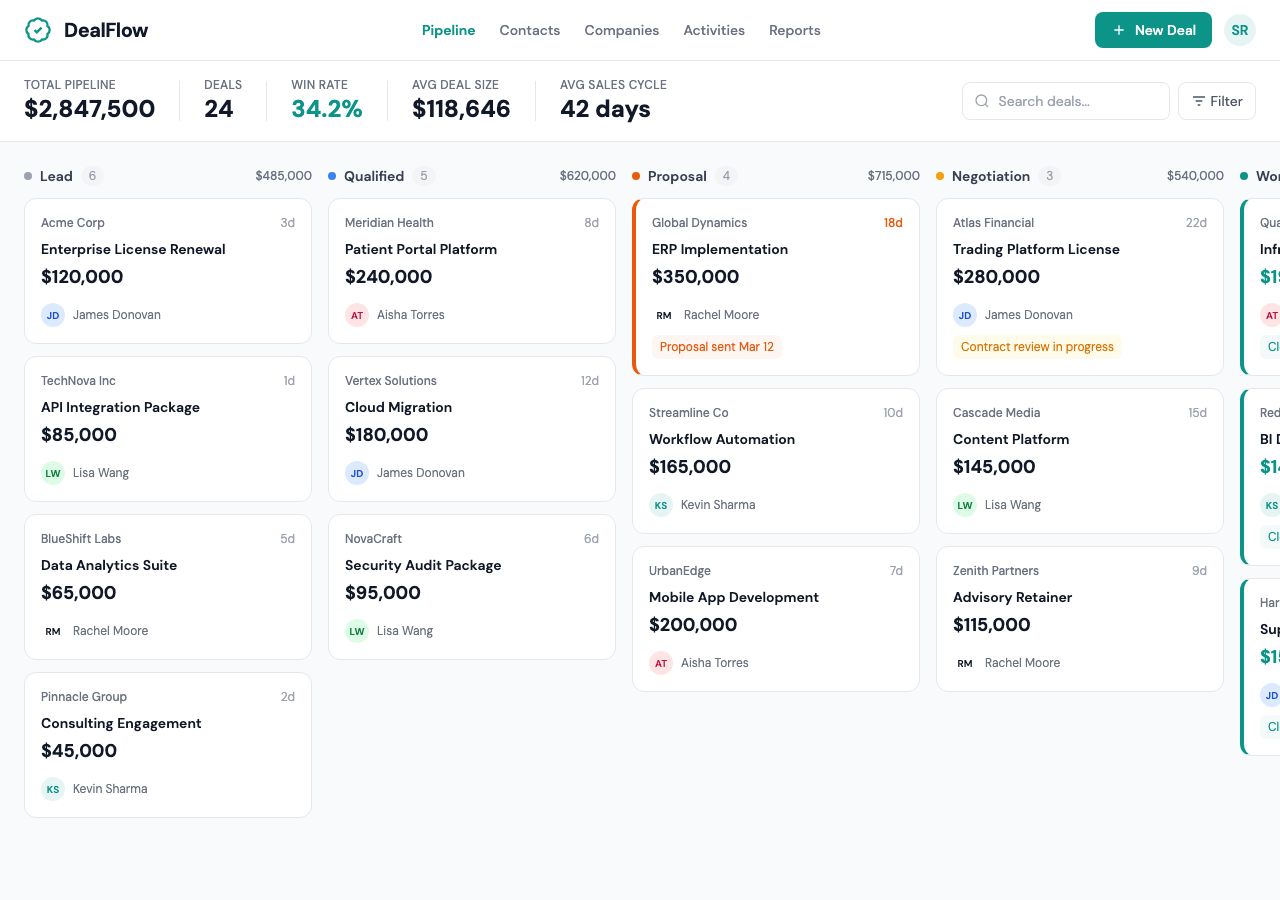
Four of 39 web builds in the showcase. Ask which of these your team currently does in a spreadsheet — that's your first build. See all 81 →
Two days, not two quarters
Remember Kopi Kita's benchmark gap — waste at 7.4% of COGS vs a 4.5% median? Nobody could fix it because nobody could see it. The ops lead — no coding background — built the tool herself:
| Phase | Traditional | Vibe coded |
|---|---|---|
| Spec & approval | 3 weeks | 1 hour |
| Vendor / IT queue | 6–10 weeks | none |
| Build v1 | 8 weeks | 1 day |
| Pilot & fix round | 4 weeks | 1 day |
| Live in front of staff | ~5 months | 2 days |
Three taps per waste event, a photo if it's odd, one live dashboard per outlet. Waste visible daily instead of at month-end — 7.4% → 5.1% in one quarter, without a single new hire.
Client portals, quote calculators, booking tools, internal dashboards, onboarding apps — built by accountants, marketers and ops leads.
Open the showcaseIllustrative figures for teaching. The showcase link opens 81 working builds — each one carries the prompt that produced it.
The faster-than-them loop
Every week you wait,
the gap gets wider
The blue line does not slow down to wait for you. That is the whole argument for running the loop weekly instead of annually.
Technology — Exponential
New models and tools compound on each other, doubling capability again and again.
Organisational Understanding — Linear
Awareness grows steadily as people are trained and exposed to what's possible.
Organisational Change — Linear, Slower
Process, structure and incentives move even more slowly than understanding does.
Everything today was about steepening the red line: prompts that compress research from a fortnight to an hour, n8n workflows that run without anyone remembering, and tools shipped in days. You cannot bend the blue line — you can only close the distance to it faster than your competitors do.
You don't out-think
your competitors.
You out-cycle them.
A prompt gives you one good answer. A workflow gives you that answer every week, forever. And a tool you shipped in two days is learning from real customers while your competitor is still writing the brief.
A competitive five-sided skill set
Today you ran three of the five: analytics, agentic automation and vibe coding. The companies that pull furthest ahead build capability across all five points — and let orchestration conduct the lot.
Each point is a hands-on, HRDC-claimable AITraining2U course — the pentagon from our Manifesto, made practical. Next: where to learn each →
Our courses at AITraining2U.com
All courses are HRDC-claimable — available as enterprise & public workshops. AITraining2U.com

Thank you.
Pick one competitor and run the dossier prompt this week. Then automate the watch, and ship one small tool. One thing live beats five ideas noted.
Practical. Proven. Purposeful. — AITraining2U PLT